THE ECONOMICS OF REMEMBERING
- ANDIE SZATMARI
- 11 hours ago
- 3 min read

You have between 3,000 and 25,000 photographs on your phone right now. You've opened maybe fifty of them twice. The reason almost none of them mean anything comes down to simple economics, and it's fixable.
Somewhere on your phone right now there are between 3,000 and 25,000 photographs. I'd bet you're closer to the higher number. I'd also bet you haven't opened most of them since the day you took them, and that fact bothers you a little every time you think about it. That's not a personal failing. It's economics.

supply and demand work on memory too
Ren's song "Money Game" takes the old nursery rhyme about selling seashells on the seashore and turns it into a lesson on market manipulation: flood a beach with shells and nobody wants one anymore, no matter how pretty it is. The shells aren't less beautiful. Value collapsed because there are suddenly thousands of them.
Photographs work the same way. Value was never really about the image itself. It's about the relationship between how much of something exists and how much people want it. Flood the market and you flood the meaning.
what 36 frames a roll actually bought you
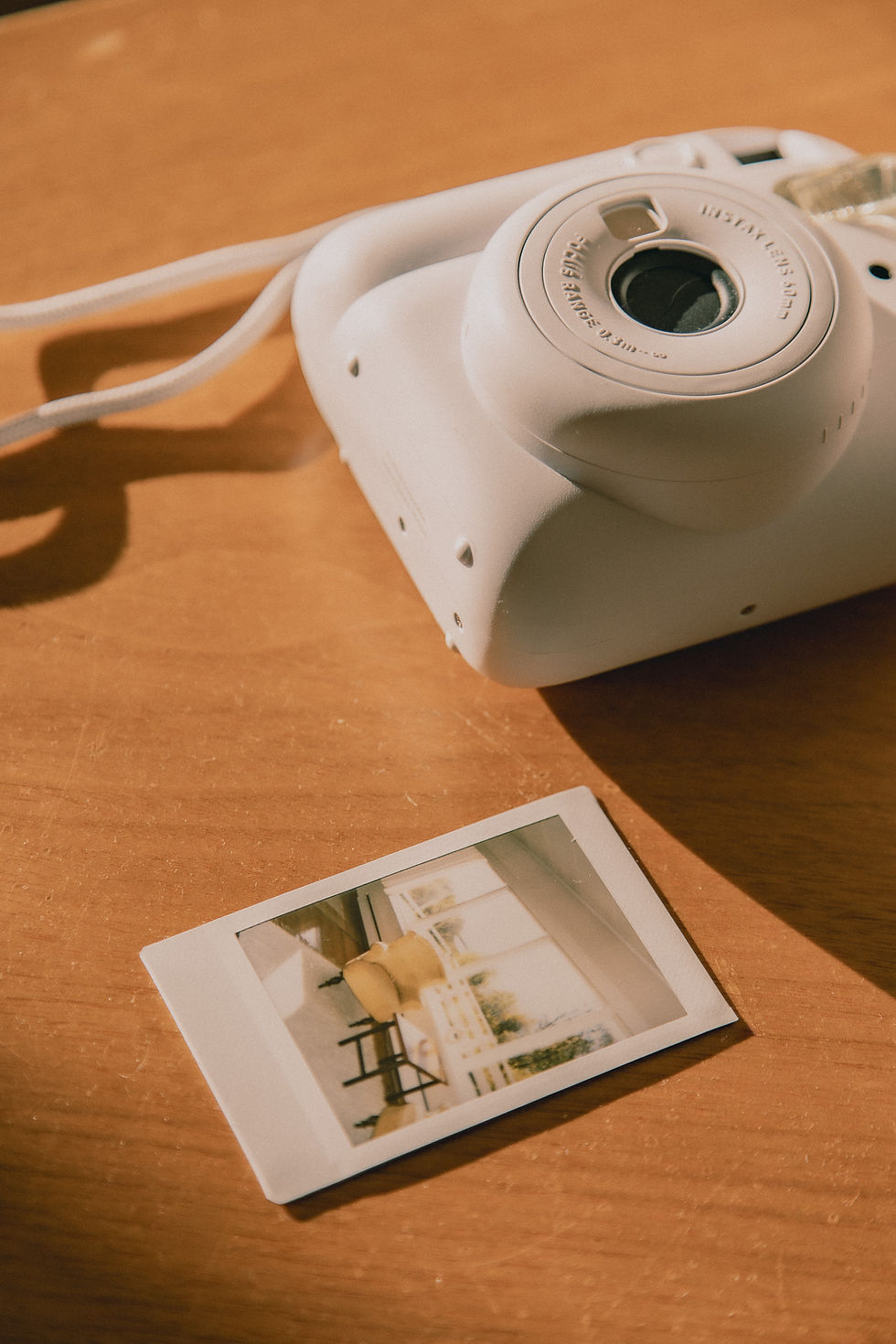
When photographs were scarce, each one carried weight. An analogue camera held 36 frames a roll, which sounds like a technical limitation but was really a market condition: low supply, forced demand. You looked at a moment, measured it against the frames you had left, and made a decision. Was this worth it? Sometimes you got it wrong. Sometimes you got it exactly right. Either way, the decision meant something. It put weight behind the act.

digital photography broke the market
Digital removed the limit. Infinite supply sounds like abundance, and in some ways it is. But infinite supply also destroys price. In an attention economy, price is what determines whether something gets looked at twice. An archive with no ceiling has an average value per image that approaches zero, because nothing signals which ones actually matter.
You have 8,000 photographs and you've opened fewer than 50 of them more than once. The shells are back on the sand. Nobody's buying.
scarcity is what creates value
The framed photograph on your wall is the exception, because it survived a filter. Economically, that's a supply restriction. Someone looked at the whole archive and cut it down to one. The image is scarce again, on purpose, which is exactly how a luxury market works. A diamond isn't rare because diamonds are rare. It's rare because someone decided how many to release.
That framed photograph is your own private version of the same market. You decided what was worth producing as a one-off. You set the price, which is wall space and daily attention, and you've been paying it every day since without ever thinking of it as a transaction.
a photograph is a signal, not just a memory
Something made with intention is different from something that happened because the shutter was already open. A photograph you chose is a signal. What you put on your wall, your profile, your feed, tells people who you are before you say a word. A visual life with one extraordinary image reads differently from one with four hundred ordinary ones. Visual taste is a kind of intelligence, and people who have it recognise it immediately in other people.
I'll say the honest part. I spend a lot of energy arguing against living your life to impress people, and I still can't take this truth away from the argument, because it's true whether I like it or not. The world reads visual cues and makes fast judgments from them. It responds differently to someone whose image is considered than to someone whose image is careless. Pretending otherwise is its own kind of performance.
make the one that stops you on a tuesday
I can stand behind one version of this: use it for yourself, not for an audience. Make the photograph for the ordinary morning, the one you walk past running late and stop anyway.
The fix isn't complicated, even though it runs against everything the attention economy wants from you. One photograph made with intention outweighs ten thousand taken without it.
Think about what you actually reach for when you want to show someone who you are. The mirror selfies pile up in the camera roll as proof you exist and own a phone. But the image you choose when it actually matters, the one you send to someone you want to impress, the one that ends up framed, is always something else.

That's the case for booking a personal photography day or a portrait session: one image, decided on purpose, that actually gets framed.


Comments